


Long-term storage
Long-term storage for the months you are away.
- HOA fee
- $1,000 / quarter
- Recorded in Lee County
- Deeded
You fly north in late April and come back in early November. The car, the coach or the boat sits for something between five and seven months in the worst part of the Florida year, and what you do in the two hours before you leave decides whether it starts in November or gets flat-bedded to a shop.
This is the checklist we give owners. It is genuinely useful whether or not you ever buy a unit here, and it is written for a conditioned indoor space, which is the single biggest variable in the whole list.
- HVAC per unit
- Dedicated
- Roof membrane
- 60-mil TPO
The checklist
Eight things to do before you fly north.
- 01
Fill the tank and add stabilizer
A nearly full tank leaves little air space for humid air to condense in, and ethanol-blended fuel pulls water out of that air. Add a fuel stabilizer at the dose on the bottle, then run the engine for ten to fifteen minutes so treated fuel reaches the pump, lines, rails and injectors, stabilizer sitting untreated in the tank does nothing for the fuel system.
- 02
Put it on a tender, not a trickle charger
A maintainer that monitors and float-charges is not the same as a charger that pushes current continuously. Modern vehicles have parasitic draw from modules that never fully sleep; a lead-acid battery at 95°F self-discharges several times faster than at 75°F. Six months unattended in Florida heat is usually a dead, sulphated battery.
- 03
Overinflate slightly and think about flat spots
Set tires a few psi above the door-placard pressure, pressure falls over months and a soft tire flat-spots faster. For a car sitting more than three months, consider tire cradles or moving the vehicle a few feet monthly. Flat spots in modern tires usually roll out after a few miles; on an older or high-performance tire, sometimes they do not.
- 04
Do not set the parking brake
Brake pads left clamped against a rotor for months in humid air can bond to it, and the rotor rusts in a ring where the pad sat. Chock the wheels instead and leave the transmission in park or in gear.
- 05
Change the oil before you go, not after you get back
Used oil carries acidic combustion by-products and moisture. Leaving it in the sump for six months is six months of that sitting against bearing surfaces. Fresh oil is the cheapest insurance on the list.
- 06
Deal with moisture inside the cabin
Crack nothing, close everything, and leave desiccant containers on the floor and the seats. Do not leave a damp towel, a beach bag or anything organic in the vehicle. If the storage space is conditioned, this becomes trivial; if it is not, it is the item that most often ruins an interior.
- 07
Pests
Rodents nest in air boxes and eat wiring insulation; Florida also gives you ants and palmetto bugs. Block the exhaust and air intake with steel wool if the vehicle will sit for months, note it on the steering wheel so you remember to remove it, and keep no food, paper or fabric in the cabin. Traps or bait outside the vehicle, never inside it.
- 08
Wash, dry and wax first
Bird droppings, bug residue, road salt from the trip down and tree sap all etch given six months. Wash it, dry it completely, wax it, and put a breathable cover on it in conditioned air.
The specific ways a parked Florida car degrades while you are north.
- 01
Interior heat and UV
Behind glass in direct sun, a closed car's interior runs well above the outside air. Months of it cook dashboards, adhesives and electronics, fade leather dye, and embrittle rubber and vinyl trim.
- 02
Humidity, mold and upholstery
In a closed, unconditioned space summer moisture has nowhere to go. It condenses into upholstery, carpet padding and headliners, the classic cause of a musty interior and visible mold on return.
- 03
Brake rotor surface rust
Rotors left stationary in humid air develop a surface rust layer within days to weeks. It usually burns off in the first few stops, but on a car sitting six months it can pit deeper, especially if the car was driven wet before it was parked.
- 04
Ethanol fuel phase separation
Standard E10 pump fuel absorbs moisture over time. Past a saturation point the ethanol-water mixture separates and drops to the bottom of the tank, fuel that will not run an engine correctly and can cause damage if it reaches the injectors.
- 05
Battery self-discharge and parasitic draw
Every modern car draws current from its computers even fully off. Combined with normal self-discharge in heat, a battery left unattended for a season is frequently dead, and after a prolonged deep discharge it often will not take a charge again.
- 06
Rodents in the air box and wiring
An unattended car in a warm climate is an undisturbed nesting site. Chewed wiring looms and nests in air boxes and cabin filters are among the most common and most expensive surprises snowbirds find on return.

Start it every few weeks, or not at all.
The worst thing you can do is have someone start the engine for five minutes once a month and shut it off. That is long enough to produce water vapor in the crankcase and exhaust and not long enough to boil it off, so you end up with condensation, dilution and corrosion where you were trying to prevent it.
If somebody is checking on the vehicle, ask them to drive it for fifteen to twenty minutes so it reaches full operating temperature, long enough for the oil to come up to temperature and the exhaust to dry out. That also exercises the brakes, moves the tires off their flat spots, circulates the air conditioning refrigerant and oil, and keeps seals wetted.
If nobody can do that properly, the better plan is to leave it alone on a tender with stabilized fuel and prepare it correctly on your return. Half-measures are worse than either extreme.
What changes by vehicle type.
- 01
Class-A coach
House batteries as well as the chassis battery, and both need maintaining. Drain and sanitize fresh water, empty and flush the holding tanks, close the propane at the tank, and cover or block the roof vents and refrigerator vents against nesting.
- 02
Boat on a trailer
Fog the engine or run it per the manufacturer's lay-up procedure, drain the water from the block and lower unit, leave the drain plug out, grease the trailer hub bearings, and support the trailer so the tires are unloaded. Prop the cover so nothing pools on it.
- 03
Motorcycle
Small batteries die fastest, tender every one. Stabilize the fuel, and on a carbureted bike either run the bowls dry or fill and stabilize, but do not leave them half full. Get the tires off the ground if you can.
- 04
Classic and pre-1990 cars
Points, carburetors, non-synthetic rubber and cork gaskets all dislike sitting. These are the vehicles that most reward stable, conditioned air, and the ones where the parking brake and fuel advice above matters most.

What the unit takes care of while you are gone.
- Climate
- Dedicated HVAC per unit, on your own meter, running continuously
- Electrical
- 220V, 150A, 1 or 3 phase service in every unit, individually metered, every vehicle on its own tender circuit
- Ultraviolet exposure
- None, no windows in the bay
- Access while you are away
- 24/7 gated access for whoever you authorise to check on it
- Flood exposure
- FEMA Flood Zone X, outside the Special Flood Hazard Area
- Distance from the open Gulf
- Roughly nine miles inland
- Structure
- 170 mph ultimate design wind speed
- HOA fee
- $1,000 per quarter on a 1,350 sq ft unit, increasing pro rata with size; taxes and insurance additional
The season you are away is the season that matters.
Atlantic hurricane season runs from 1 June through 30 November, almost exactly the months a snowbird owner is not in Florida. Whatever you leave behind, you are leaving it for that window and you will not be here to move it.
The site sits roughly nine miles inland from the open Gulf, in FEMA Flood Zone X. The buildings are engineered to a 170 mph ultimate design wind speed.

Plans that suit a seasonal owner.
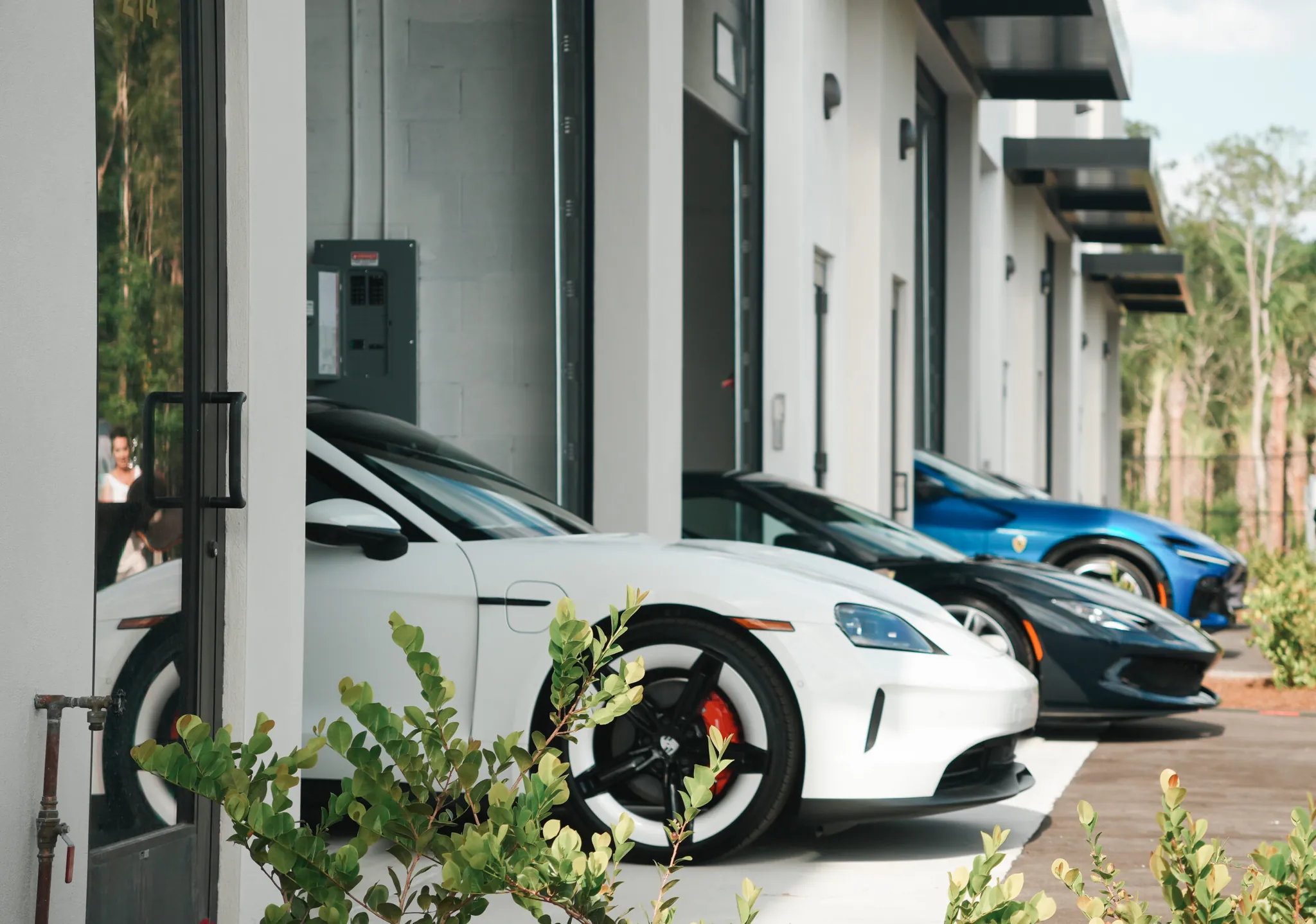
The cars
Four on the floor, more on lifts
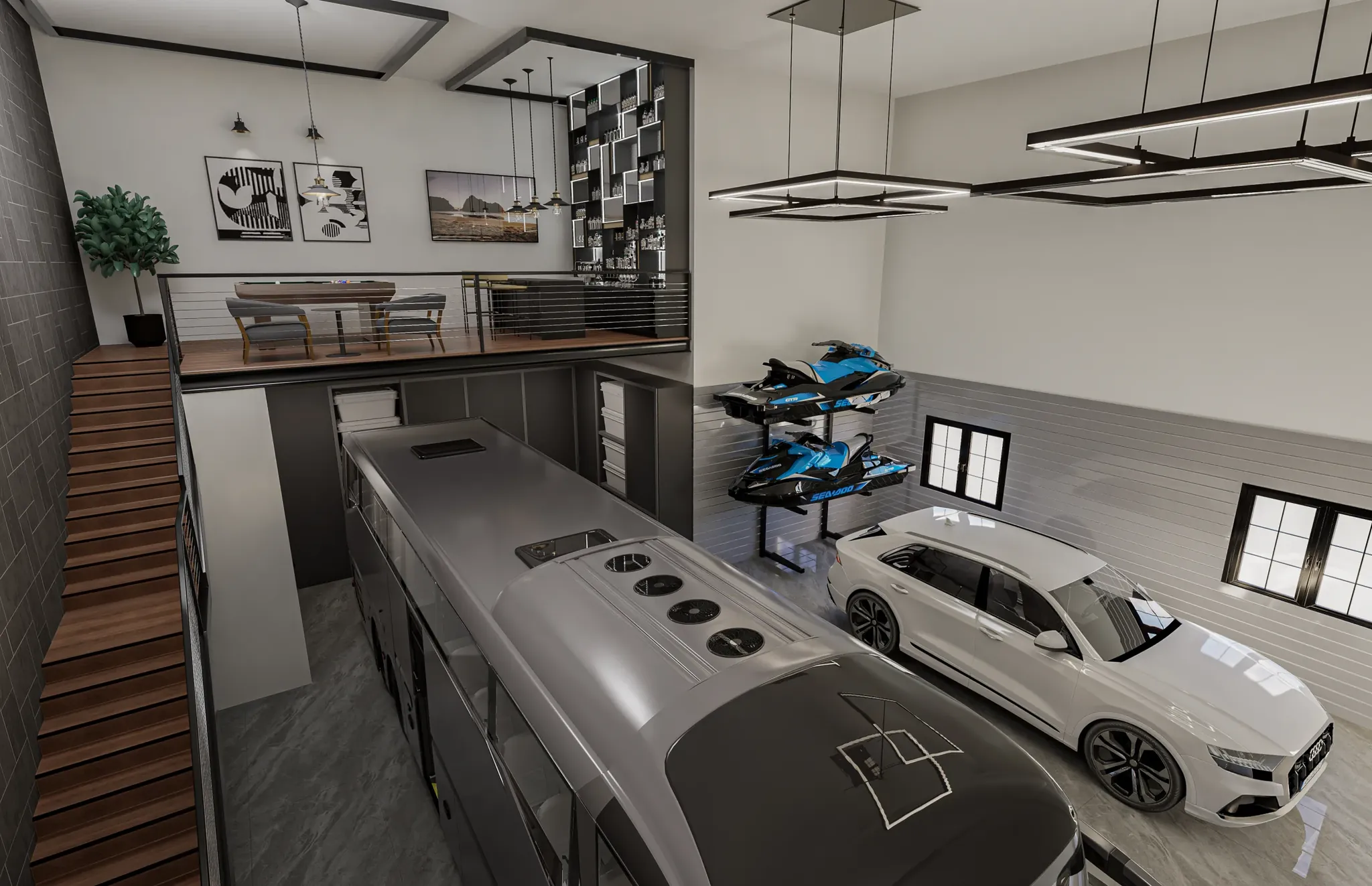
The RV
Driven in with the tow car still hitched
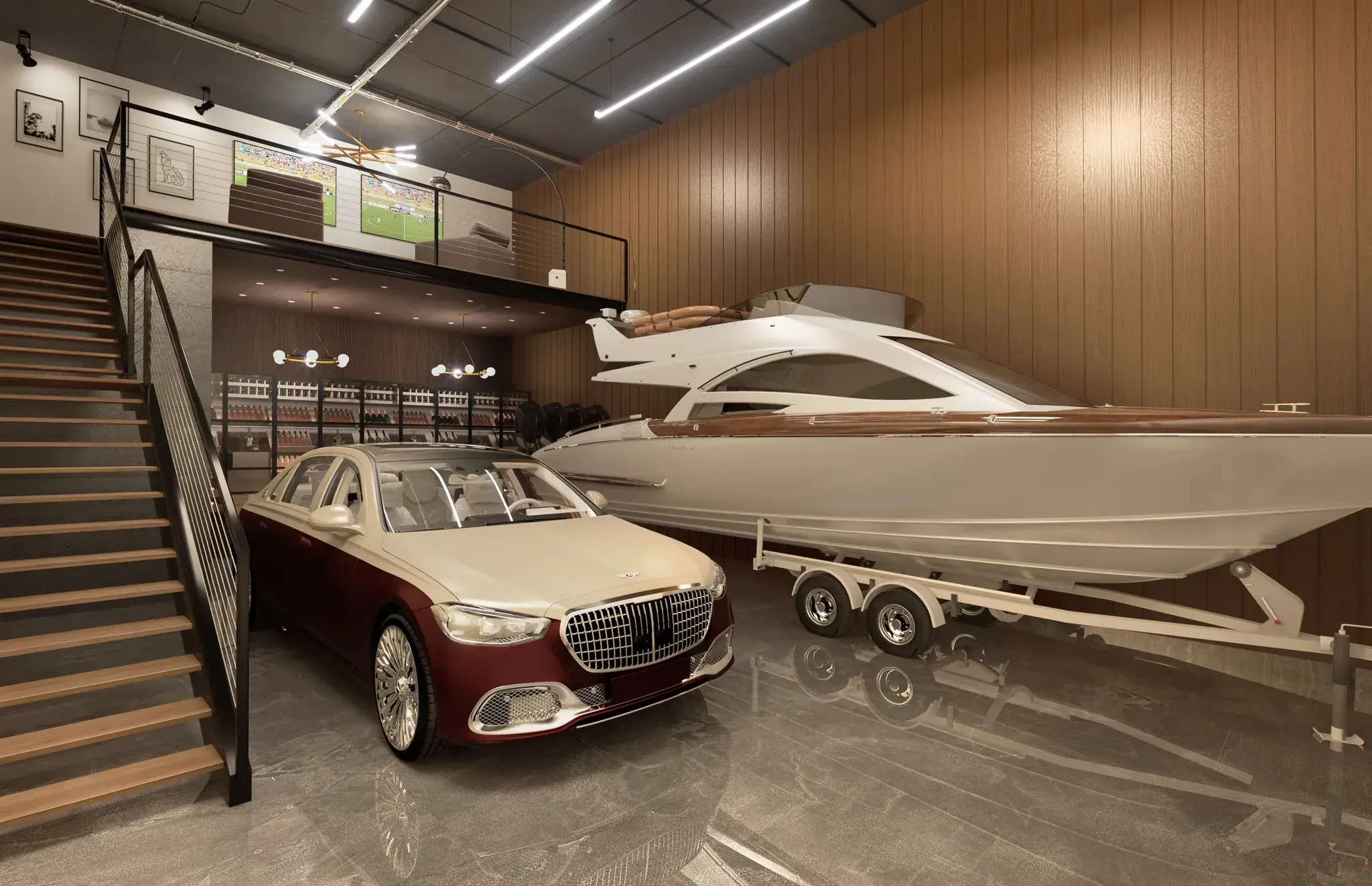
The boat
Trailer and tow vehicle, nine miles inland
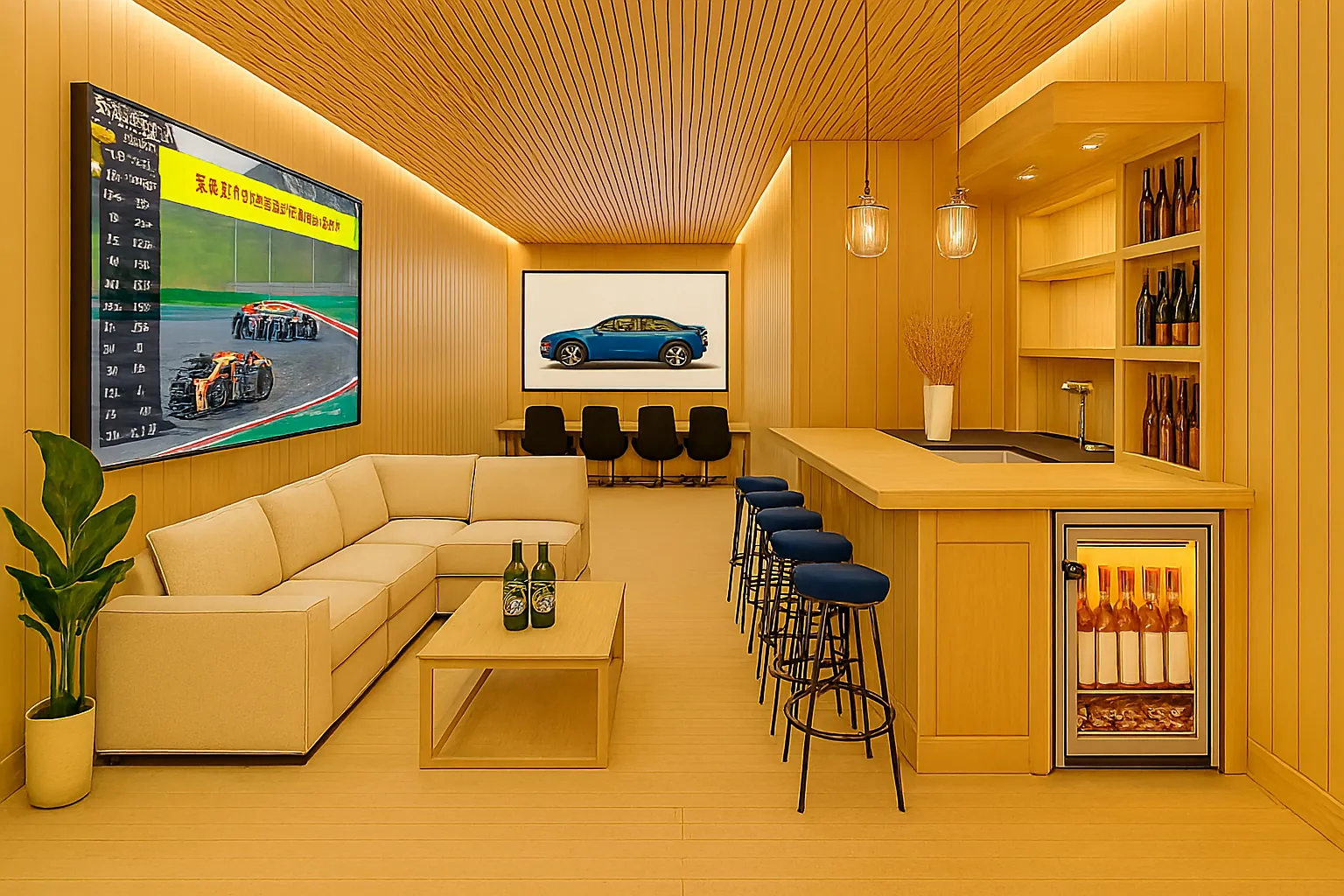
The second floor
320 to 960 sq ft, plumbed for a wet bar


Baron
1,350 sq ft · 320 sq ft second floor · From $399,000
1,350 sq ft with a 320 sq ft second floor. The efficient choice if you are storing two or three vehicles for half the year and want the smallest conditioned volume to hold while you are away.
Baron plans
Wizard
2,708 sq ft · 650 sq ft second floor
2,708 sq ft double unit. For the household that leaves cars, a boat and a trailer behind every summer and wants all of it in one place under one HVAC system.
Wizard plansQuestions about leaving a vehicle for the season
The site-wide facts, stated once: 170 mph ultimate design wind speed, FEMA Flood Zone X, outside the Special Flood Hazard Area, roughly nine miles inland from the open Gulf, and an association fee of $1,000 per quarter on a 1,350 sq ft unit, increasing pro rata with size. RV dump station on site, included in the association fee. How the building is engineered and what it costs to own are explained in full on their own pages.
Leave for the season with the collection properly stored.
Review current availability before your next departure date decides for you.
Best-matched plan
Baron
- Floor area
- 1,350 sq ft
- Second floor
- 320 sq ft second floor
- Price
- From $399,000
For four cars or more with lift(s), a workshop wall and a second floor you will actually use.
Check current availability, see Baron