


Exotic car storage
Exotic car storage, in a unit you own.
- HVAC per unit
- Dedicated
- Service per unit
- 220V, 150A, 1 or 3 phase
A Ferrari 296 or a McLaren 720S is not a storage problem, it is an exposure problem. Paint that costs five figures to correct. Leather and Alcantara that hate humidity. Battery management systems that quietly drain a pack over six weeks. An insurer with an opinion about where the car sleeps. And a car that people photograph.
A deeded unit answers all four at once: your own four walls, your own climate system, your own door, and no shared floor where somebody else's transporter driver is maneuvering at seven in the morning.
- Knight, floor area
- 1,800 sq ft
- Gated, camera-monitored access
- 24/7
The risks
Four things that damage an exotic in storage, and what the building does about each.
- 01
Paint and clear coat
Condensation cycling under a cover leaves water spots that etch. Airborne dust in an open warehouse becomes swirl marks the first time anyone wipes the car down. A sealed, conditioned private unit removes both the moisture cycle and the traffic that carries dust.
- 02
Leather, Alcantara and adhesives
Sustained high relative humidity is what lifts trim adhesive and grows mildew in perforated seats. Sustained heat is what dries hide. A dedicated per-unit HVAC system holds one condition rather than following the outdoor swing.
- 03
Electronics and battery packs
Modern supercars run dozens of modules that never fully sleep. Left alone, a pack is flat in weeks and a dead pack on a hybrid is not a jump-start, it is a dealer visit. 220V, 150A, 1 or 3 phase individually metered service means dedicated tender circuits for every car, permanently.
- 04
Fluids and seals sitting still
Rubber seals take a set and fluids stratify when a car does not move for months at a stable-but-hot temperature. Climate control slows all of it; the 24/7 access is what lets you actually go and run the car when you should.
Eight months of heat, and the humidity that comes with it.
A closed car in a Florida parking lot behaves like a greenhouse. Glass admits short-wave radiation and traps the long-wave heat that surfaces re-emit, and cabin temperatures run far above the outside air within an hour. Dashboards cook. Leather loses its plasticizers and starts to crack at the seams and the bolsters. Adhesives release, and the headliner is usually the first thing to sag.
Humidity is the slower one. Sustained moisture in an unconditioned space condenses on cool metal overnight, which is where surface rust on rotors and unpainted suspension components comes from. It feeds mold in carpet, seat foam and the ventilation ducting, and that smell never fully comes out of an interior once it is in the foam.
None of this is exotic to exotics. It is just that the repair bills are. A dashboard retrim, a full interior, a respray on a three-stage paint or a control module for a car with a two-year parts queue are the kind of numbers that make a conditioned bay look like insurance.
Why a home garage or a self-storage unit falls short.
The home garage
It is unconditioned in almost every case, so the car lives in the same heat and humidity as the outside air with less airflow. The door is a residential-grade panel and it is the weakest opening in the house. The lot elevation is whatever the developer graded it to. And the garage is a thoroughfare: bicycles, contractors, pool equipment, a car door swung open in a narrow bay.
The self-storage unit
Access is usually business hours. Climate control, where it exists, is a shared system set for boxes, not for a car. There is rarely a dedicated circuit for a tender. Working on the vehicle is normally prohibited outright, and so is storing fuel and fluids. The roof, the insurance and how long the building stays are someone else's decisions.
What ends a car in a storm here is water.
It is usually not wind. It is salt water, which wicks up through carpet and foam into wiring looms, connectors and control modules and keeps corroding them for years after the car has apparently dried out. That is why a flood car is written off, and why elevation and distance from the coast matter so much to a vehicle.
Excalibur sits roughly nine miles inland from the open Gulf, in FEMA Flood Zone X, outside the Special Flood Hazard Area. The buildings are engineered to a 170 mph ultimate design wind speed.

Your own door, your own walls, and no shared floor.
There is no attendant with a key box, no valet stack, no shared bay where your car sits beside somebody's project truck, and no published tenant list. The site is gated and camera monitored at the perimeter and drive aisles; inside your unit, what you own and how you keep it is yours alone.
Title is held however you choose to hold it, your name, a trust, or an LLC. Many owners buy in an entity for exactly this reason. We will answer any question about the building; we will not advise you on how to take title, and you should ask your own attorney.
Transporters can be received inside the gate at the drive aisle rather than at a residential curb, which is usually the single most-visible moment in owning a car like this.
What your insurer will ask.
Underwriters writing agreed-value policies on high-value vehicles ask about structure, access control, monitoring, flood exposure and climate. Here are the answers in one place.
- Structure
- Engineered to a 170 mph ultimate design wind speed
- Flood
- FEMA Flood Zone X, outside the Special Flood Hazard Area
- Distance from open Gulf
- Roughly nine miles inland
- Access control
- Gated site, 24/7 owner access, camera monitoring
- Climate
- Dedicated per-unit HVAC, individually metered
- Electrical
- 220V, 150A, 1 or 3 phase per unit, for tenders and lifts
- Occupancy
- Private, single-owner unit, no shared floor

What it costs against Naples.
Excalibur's units work out to about $300 per square foot.
The association fee is $1,000 per quarter on a 1,350 sq ft unit, increasing pro rata with size. Property taxes and your own contents and vehicle insurance are additional and always will be. We are three miles from the I-75 off-ramp to RSW, roughly a ten-minute drive.

The two plans exotic owners choose.
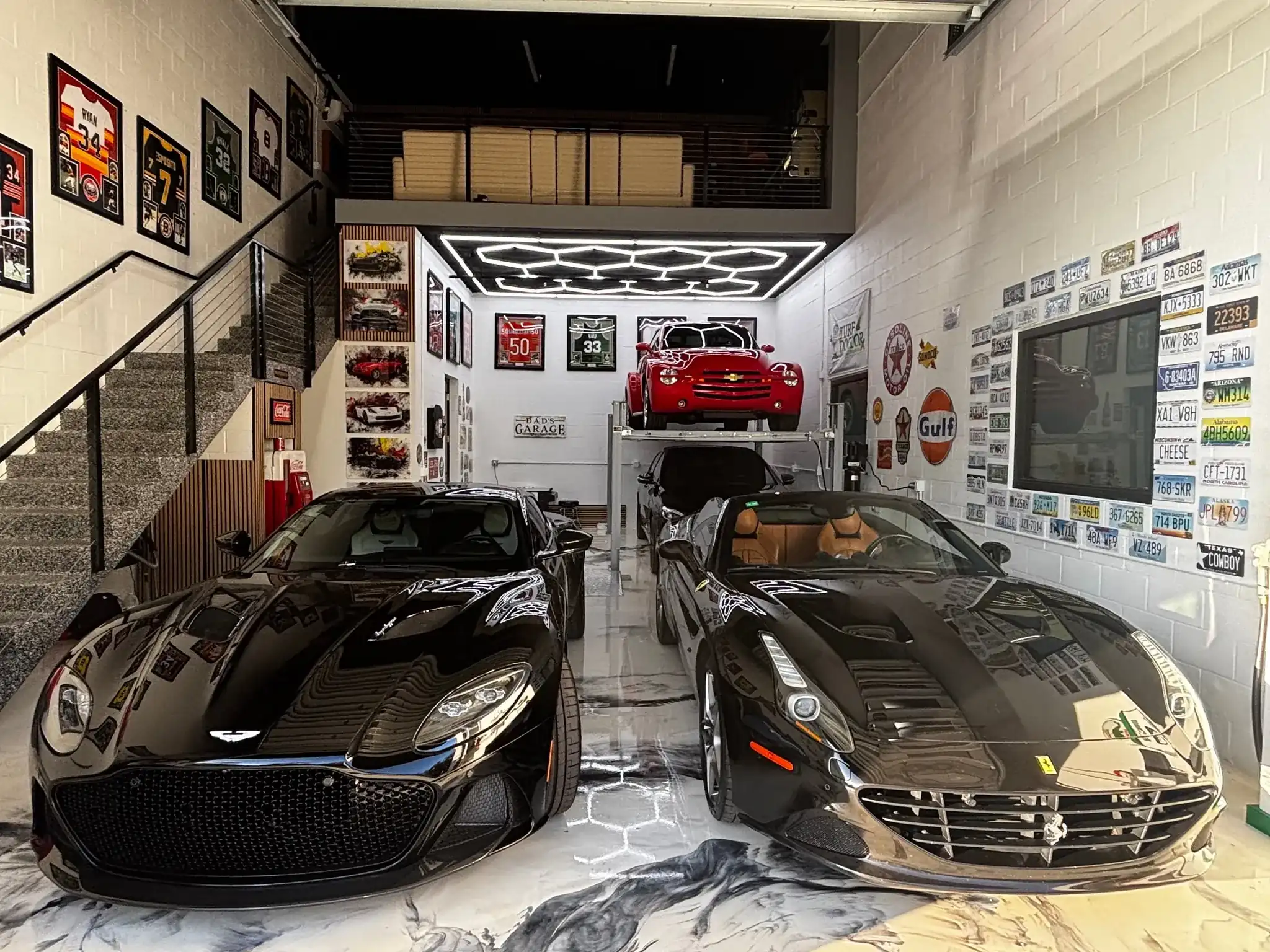
The cars
Four on the floor, more on lifts
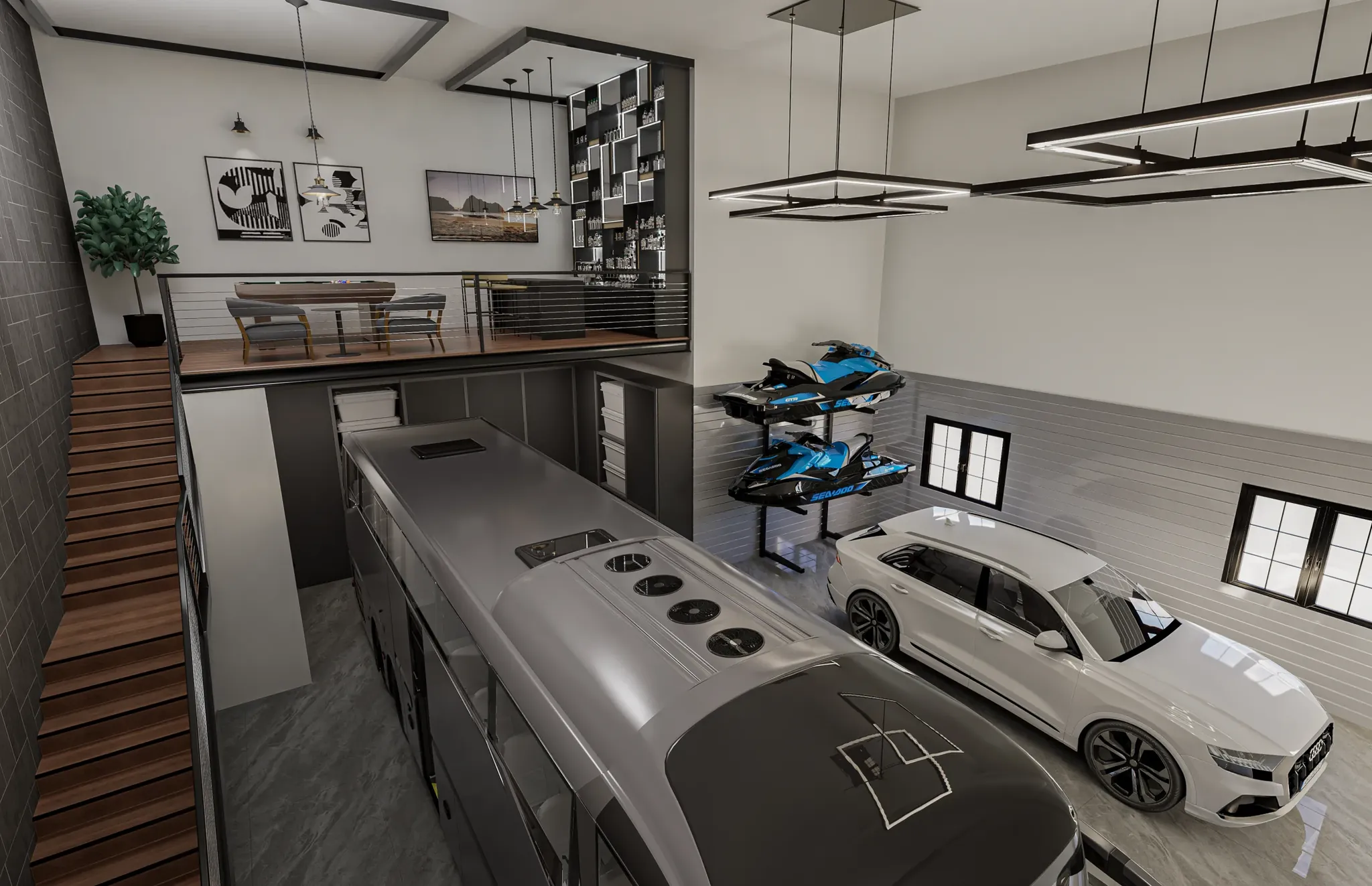
The RV
Driven in with the tow car still hitched
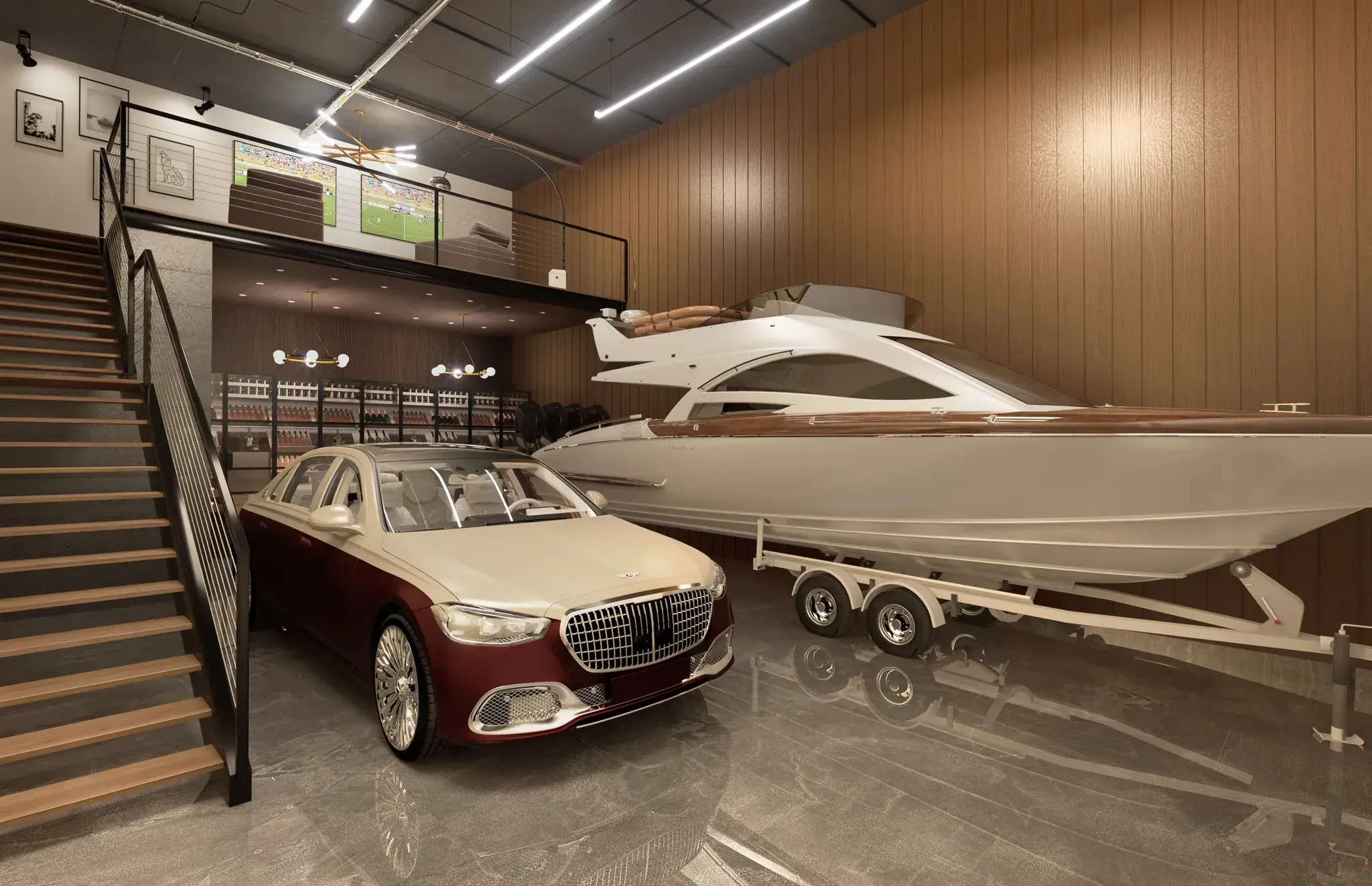
The boat
Trailer and tow vehicle, nine miles inland
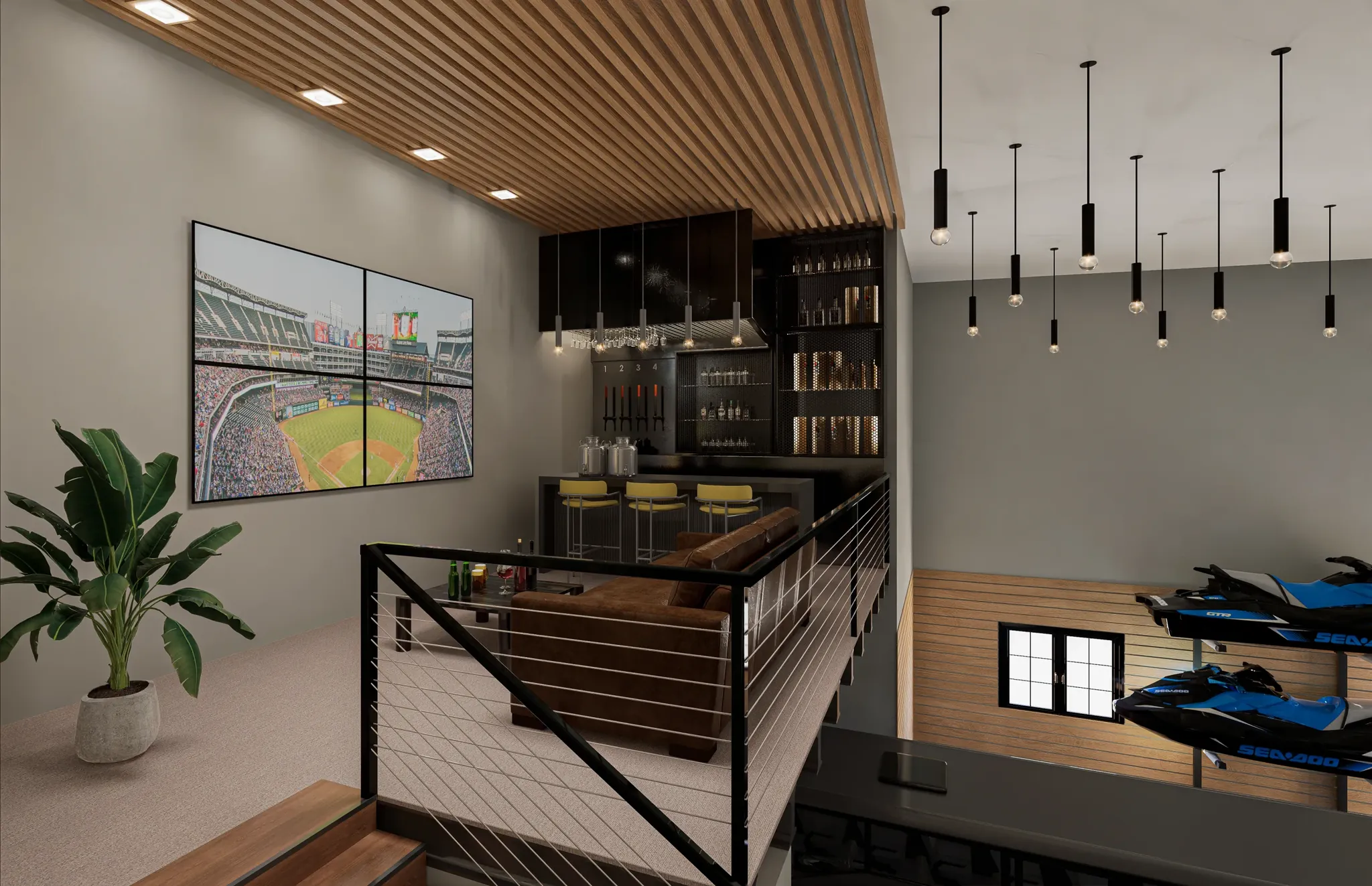
The second floor
320 to 960 sq ft, plumbed for a wet bar


Knight
1,800 sq ft · 450 sq ft second floor
1,800 sq ft gives you door-opening clearance on both sides of a wide car, a 720S needs it, plus a lift bay, a detail corner and a wall of cabinetry without the cars ever being boxed in.
Knight plans
Regent
2,350 sq ft · 325 sq ft second floor
2,350 sq ft in an L-shape. The extra leg becomes a private display area or a lounge that is visually separate from the working part of the unit, which is why owners with five or more exotics take this plan.
Regent plansQuestions about exotic storage
The site-wide facts, stated once: 170 mph ultimate design wind speed, FEMA Flood Zone X, outside the Special Flood Hazard Area, roughly nine miles inland from the open Gulf, and an association fee of $1,000 per quarter on a 1,350 sq ft unit, increasing pro rata with size. RV dump station on site, included in the association fee. How the building is engineered and what it costs to own are explained in full on their own pages.
See what private exotic-car ownership should look like.
Excalibur is one property with 41 units inside 2 buildings on 5 acres. Both buildings are complete. Tour a finished unit and review current availability in one visit.
Best-matched plan
Knight
- Floor area
- 1,800 sq ft
- Second floor
- 450 sq ft second floor
For a growing collection of five cars or more with lift(s), or cars plus a trailer and a lift.
Book a private viewing, see Knight